- Home
- Insights
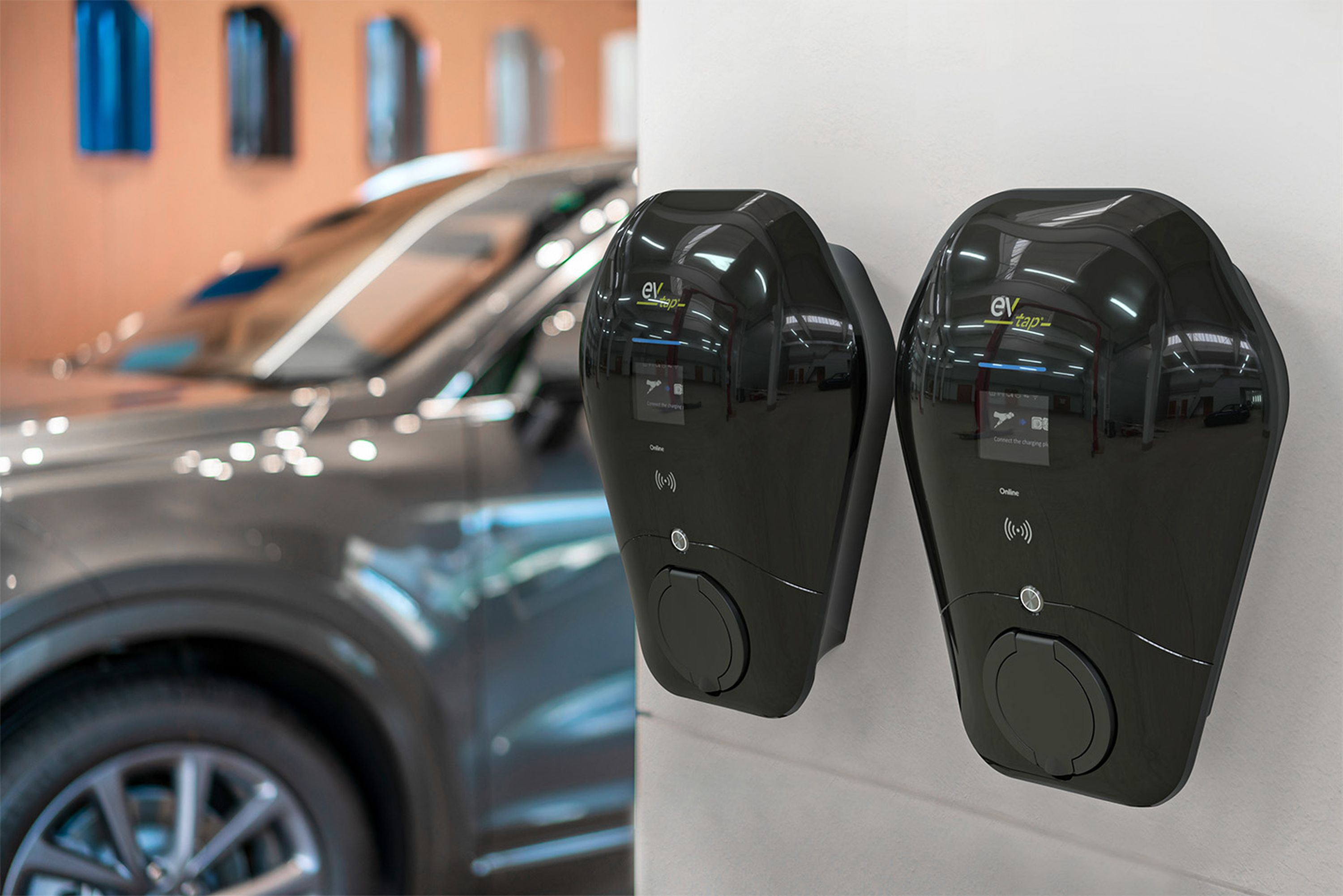
Green Charging: Optimize PV Self-Consumption with Smart Charging Stations
Harnessing the sun—what sounds like a vision of the future is already a reality with modern charging systems. Smart charging stations, combined with PV systems, enable not only environmentally friendly mobility but also enhance the overall economic efficiency of the energy infrastructure. A concept that opens up particularly interesting opportunities for businesses.
The Challenge: Synchronizing Solar Power and Charging Needs
The main challenge in solar charging lies in timing:
PV generation follows the sun's position
Vehicles are often parked at the company overnight
Charging demands frequently exceed PV generation
Fluctuating availability of solar power
Smart Systems as Game Changers
The intelligent integration of charging infrastructure, PV systems, and energy management is revolutionizing green charging. Dynamic charging management automatically adjusts charging power to match available PV output, enabling demand-driven prioritization of individual charging points while considering planned departure times.
Battery storage systems act as flexible buffers, while predictive control leverages weather forecasts and typical usage patterns for forward-thinking charge planning and optimized storage utilization. Flexible load management coordinates multiple charging points, prevents peak loads, and seamlessly integrates into operational energy management through automatic power distribution.
Practical Implementation
The success of solar charging concepts relies on the seamless integration of all components:
Technical Integration:
Communication-enabled charging stations
Intelligent energy management systems
High-capacity battery storage
Standardized interfaces
Operational Organization:
Defining charging priorities
Setting minimum charge levels
Planning availability schedules
Integration into facility management
User Engagement:
Transparent charging control
Easy-to-use interfaces
Flexible prioritization options
Mobile status updates
Detailed Economic Benefits
Integrating green charging solutions unlocks a wide range of economic advantages:
Direct Cost Savings:
Optimized PV self-consumption and avoidance of peak loads reduce electricity costs and grid fees, while operational expenses for the vehicle fleet are significantly lowered.Indirect Benefits:
Enhanced brand image through a sustainable mobility concept serves as an attractive employee perk and supports CSR goals.Future-Proof Investment:
Scalable systems ensure adaptability to growing fleets and emerging technologies, providing long-term flexibility and security.
Best Practices for Implementation
Successful implementation follows proven principles:
Planning and Sizing:
Analyze current and future charging demands
Consider PV generation profiles
Evaluate storage options
Design scalable system architecture
Intelligent Control:
Prioritize based on user profiles
Enable dynamic power distribution
Integrate weather forecasts
Automate optimization processes
Monitoring and Optimization:
Continuously track all energy flows
Analyze usage patterns
Adjust charging strategies as needed
Document savings and improvements
Conclusion: Green Charging as a Model for the Future
The integration of e-mobility and PV self-consumption through smart charging systems represents a milestone in the development of sustainable mobility concepts. Far from being just an environmental initiative, it establishes an economically compelling model for the future, driven by the seamless networking of all components via a robust energy management system.
Thoughtful planning and the deployment of modern technologies transform the vision of "solar-powered charging" into a profitable reality that benefits businesses, employees, and the environment alike. This innovative connection between renewable energy and e-mobility not only delivers immediate economic advantages but also positions companies optimally for the challenges of the energy transition.
Related posts

With our plug & play battery solution, we are paving the way to a more sustainable future
In a world that is increasingly looking for sustainable solutions, the energy sector faces the challenge of efficiently integrating and utilizing renewable energy sources. Energy storage plays a Energy storage plays a crucial role in bridging the gap between energy production and consumption. At ees Europe 2024, Europe's largest and most international trade fair for batteries and energy storage systems, HIS-Energy proudly presents its latest innovation: The Plug & Play Battery Solution, specifically designed for commercial and industrial applications.

How battery storage systems can reduce your electricity costs by up to 90%
In industrial operations, efficient management of energy costs is crucial. The use of energy storage systems, especially battery storage systems for peak shaving, plays a crucial role not only in minimizing energy costs but also in improving grid support and stability. For companies with annual operating hours below or above 2500, these methods offer significant savings potential.

Rely on safety when it comes to fire protection
The saying "safety first" is certainly very important in many areas of life. Everyone is talking about different topics: financial, private, professional. One aspect that concerns us all is fire protection. This level of safety in the event of a fire is particularly high in public buildings such as hospitals, care facilities or daycare centers.


What is Peak Shaving?
Peak shaving, also known as peak load capping, refers to the reduction of peak loads in electricity consumption, which can cause significant costs, especially for large industrial consumers. These peaks can be reduced by using commercial storage systems by supplementing the power supply during peak load times with the energy stored in battery storage systems.

Pre-assembled Cable Harnesses vs. On-site Assembly
Time is money – this old saying is especially true when installing solar power plants. Cabling is a critical cost factor that is often underestimated. But this is precisely where there is significant potential for savings: up to 20% of the total costs can be saved by using pre-assembled cable harnesses. How is this possible?

4 Reasons to Use Lithium Iron Phosphate Batteries in Storage Systems
Battery cells in a conventional battery are connected to form a battery module, regardless of size and capacity. These battery cells are connected to one another to supply homes or businesses with stored solar energy for hours. By connecting multiple battery modules, the capacity of the battery is scaled.

Multi-Use Scenarios for Energy Management Systems
The days of simple application scenarios in the energy industry are over. Modern energy management systems (EMS) are evolving into multifunctional control centers that intelligently combine various applications. A development that is not only technically fascinating, but also economically convincing.