- Home
- Insights
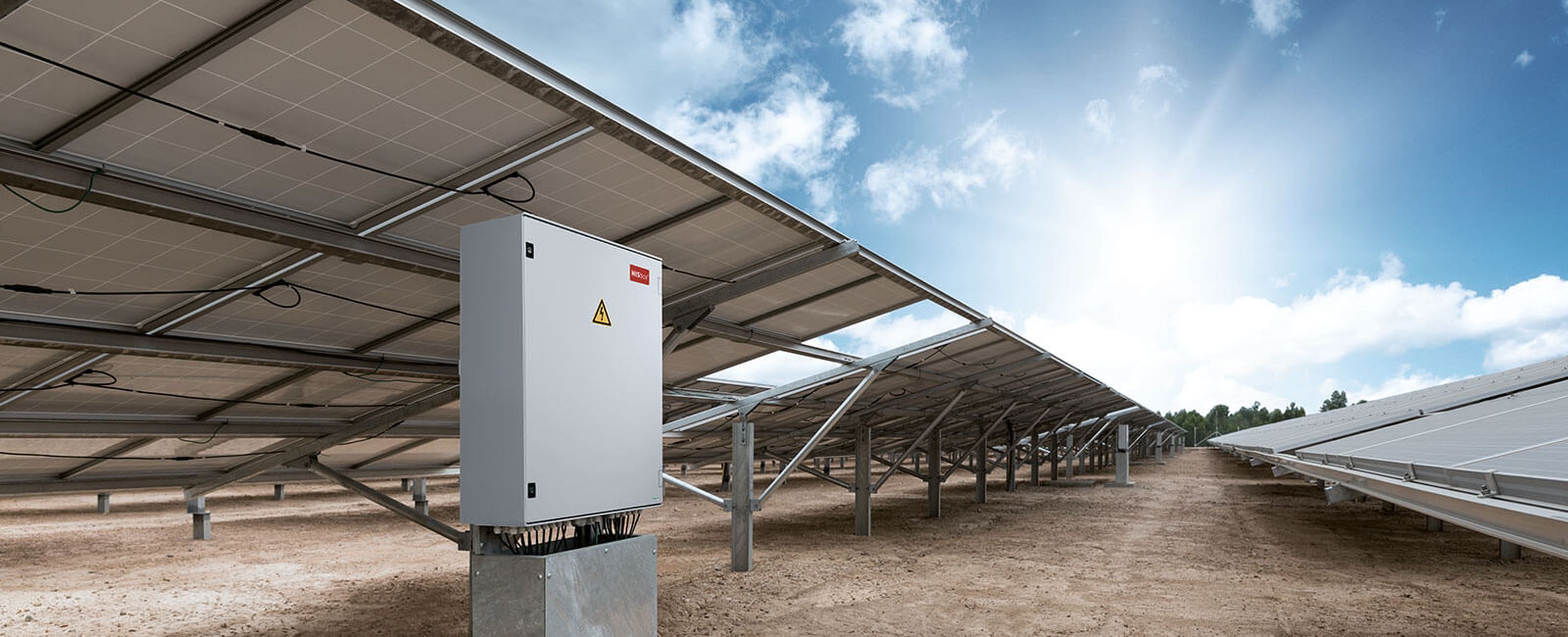
Dimensioning of generator connection boxes: From the standard solution to the project-specific configuration
When planning large-scale PV systems, the correct dimensioning of generator junction boxes (GAK) is a key decision. While standard solutions are sufficient for many applications, complex projects often require customized configurations. The trick is to recognize when which approach is the right one.
Evolution of System Monitoring
Classic Generator Junction Boxes primarily serve protection and switching functions. Modern GJBs, however, are intelligent hubs that continuously monitor and analyze operational parameters:
String currents and voltages in real-time
Temperature development at critical points
Insulation values and ground fault monitoring
Status of surge protection and fuses
Environmental conditions and weather parameters
Data as the Key to System Efficiency
The quality of system monitoring reaches an entirely new level with smart monitoring. Precise fault diagnostics enable exact localization of disruptions down to the string level, distinguishing between critical and non-critical deviations. Degradation phenomena are detected early, allowing timely countermeasures to be implemented.
Advanced trend analyses facilitate predictive maintenance, identifying gradual performance declines and optimizing maintenance schedules. Performance optimization benefits from detailed yield analyses per string, providing valuable insights into optimization potential by comparing system components under identical conditions.
Digital Integration Adds Value
Modern monitoring systems in GJBs are more than just data collectors:
Smart Data Processing:
Automated plausibility checks
Self-learning algorithms for anomaly detection
Correlation analyses with weather data
Seamless Communication:
Standardized protocols (Modbus, TCP/IP)
Cloud integration for remote access
Automatic alerts for critical conditions
Visualization and Reporting:
Intuitive dashboards
Automated report generation
Export functions for documentation
Economic Benefits of Smart Monitoring
The integration of intelligent monitoring systems unlocks diverse economic opportunities. In terms of operational costs, it leads to a significant reduction in unplanned maintenance efforts and more efficient fault detection, resulting in optimized maintenance planning. System availability benefits from faster fault resolution and the prevention of consequential damages, minimizing downtime.
Notably, improved system performance ensures maximum energy yield through continuous performance optimization and early detection of degradation. This combination of cost savings and performance enhancement delivers sustainable economic value.
Practical Implementation
The successful integration of smart monitoring systems depends on the following key factors:
System Architecture:
Scalable solutions for various plant sizes
Future-proof communication standards
Durable hardware for outdoor applications
Data Management:
Secure data transmission and storage
Efficient data processing
Flexible export options
User-Friendliness:
Intuitive user interfaces
Customizable alert systems
Mobile access options
Conclusion: The Path to an Intelligent PV System
Smart monitoring in generator junction boxes represents a turning point in the evolution of modern PV systems. It combines precise monitoring with intelligent data analysis and predictive maintenance into a holistic concept, enabling maximum system performance with minimized operational effort. Early consideration of this technology during the planning phase is crucial to fully harness its benefits.
Modern GJBs with smart monitoring capabilities are not just a technological upgrade—they are a strategic investment in the sustainability and profitability of the entire PV system. This integration of intelligent monitoring and predictive maintenance lays the foundation for a sustainable and efficient system operation that meets the growing demands of modern solar parks.
Related posts

With our plug & play battery solution, we are paving the way to a more sustainable future
In a world that is increasingly looking for sustainable solutions, the energy sector faces the challenge of efficiently integrating and utilizing renewable energy sources. Energy storage plays a Energy storage plays a crucial role in bridging the gap between energy production and consumption. At ees Europe 2024, Europe's largest and most international trade fair for batteries and energy storage systems, HIS-Energy proudly presents its latest innovation: The Plug & Play Battery Solution, specifically designed for commercial and industrial applications.

How battery storage systems can reduce your electricity costs by up to 90%
In industrial operations, efficient management of energy costs is crucial. The use of energy storage systems, especially battery storage systems for peak shaving, plays a crucial role not only in minimizing energy costs but also in improving grid support and stability. For companies with annual operating hours below or above 2500, these methods offer significant savings potential.

Rely on safety when it comes to fire protection
The saying "safety first" is certainly very important in many areas of life. Everyone is talking about different topics: financial, private, professional. One aspect that concerns us all is fire protection. This level of safety in the event of a fire is particularly high in public buildings such as hospitals, care facilities or daycare centers.


What is Peak Shaving?
Peak shaving, also known as peak load capping, refers to the reduction of peak loads in electricity consumption, which can cause significant costs, especially for large industrial consumers. These peaks can be reduced by using commercial storage systems by supplementing the power supply during peak load times with the energy stored in battery storage systems.

Pre-assembled Cable Harnesses vs. On-site Assembly
Time is money – this old saying is especially true when installing solar power plants. Cabling is a critical cost factor that is often underestimated. But this is precisely where there is significant potential for savings: up to 20% of the total costs can be saved by using pre-assembled cable harnesses. How is this possible?

4 Reasons to Use Lithium Iron Phosphate Batteries in Storage Systems
Battery cells in a conventional battery are connected to form a battery module, regardless of size and capacity. These battery cells are connected to one another to supply homes or businesses with stored solar energy for hours. By connecting multiple battery modules, the capacity of the battery is scaled.

Multi-Use Scenarios for Energy Management Systems
The days of simple application scenarios in the energy industry are over. Modern energy management systems (EMS) are evolving into multifunctional control centers that intelligently combine various applications. A development that is not only technically fascinating, but also economically convincing.