- Home
- Insights
Why Custom Cable Solutions Are Key to PV System Efficiency
Discussions about efficient solar power plants often focus on modules and inverters. However, one often overlooked factor plays a crucial role in determining the performance and durability of the entire system: the quality and design of the cabling. Especially in large-scale projects, custom cable solutions can make all the difference.
The Hidden Efficiency Factors
The impact of cabling on system efficiency is multifaceted:
Electrical Losses:
Voltage drops due to excessively long cable runs
Increased resistance from suboptimal cross-sections
Power losses at poor connection points
Additional losses from unnecessary cable reserves
Mechanical Aspects:
Strain caused by improper cable routing
Damage risks from unsuitable installation practices
Aging due to UV exposure and weather conditions
Mechanical stress at connection points
From Standard Solutions to Customized Configurations
Optimizing cable solutions requires a holistic approach that goes far beyond standard options. Project-specific design prioritizes the precise calculation of every cable route, with cross-sections tailored to power demands and cable types selected based on installation methods. Local environmental conditions play a crucial role in the planning process.
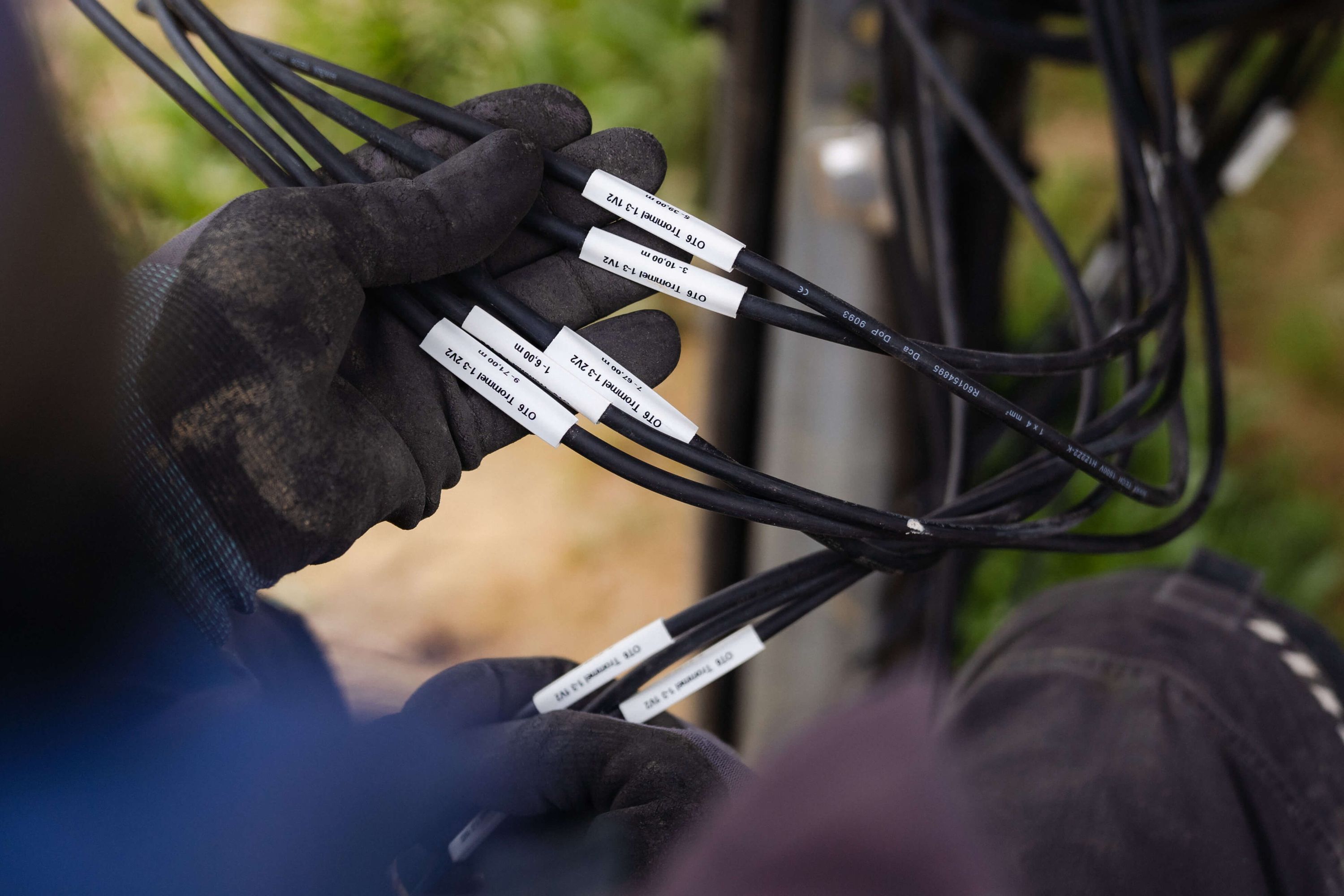
System integration ensures seamless alignment with generator junction boxes and guarantees compatibility of all connectors. Monitoring systems are smoothly incorporated, with designs already accommodating future expansions. During installation, pre-assembled wiring harnesses are utilized, featuring clear labeling systems and thoughtful cable routing to enable efficient and streamlined setup.
Planning Aspects for Maximum Efficiency
Achieving the optimal cable solution requires systematic planning:
System Analysis:
Detailed mapping of all cable routes
Calculation of current loads
Analysis of environmental conditions
Evaluation of specific requirements
Optimization Potential:
Minimization of cable lengths
Optimization of cross-sections
Reduction of connection points
Simplification of installation
Quality Assurance:
Selection of high-quality materials
Professional pre-assembly
Standardized testing processes
Comprehensive documentation
Practical Economic Benefits
The implementation of tailored cable solutions delivers multifaceted economic advantages.
Direct Cost Savings:
Reduced material costs through precise dimensioning
Minimal waste thanks to accurate pre-fabrication
Lower installation costs due to optimized setup
Minimized power losses through ideal configuration
Long-Term Benefits:
Increased system availability
Reduced maintenance costs and minimized downtime risks
Extended component lifespan, highlighting the sustainability of the investment
Operational Advantages:
Faster installation and simplified maintenance
Improved fault diagnosis
Transparent documentation for efficient management
Integration into the Planning Process
Successful implementation requires early consideration:
Project Planning:
Defining the system structure
Determining cable routes
Calculating loads
Selecting components
Engineering:
Detailed cable layouts
Bill of materials and specifications
Installation manuals
Testing guidelines
Quality Control:
Factory testing
Documented pre-assembly
Final system inspections
Acceptance protocols
Conclusion: Customized for Success
Investing in tailored cable solutions is a fundamental cornerstone for optimizing modern PV systems. Far beyond a mere technical enhancement, this holistic approach sets new benchmarks in system efficiency by synergistically combining precise planning, high-quality components, and professional execution.
Early integration of cable optimization into the planning process maximizes the achievable benefits and lays the foundation for sustainable system operations. These customized solutions have evolved from an option for specialized requirements to an essential standard for forward-thinking PV projects that demand the highest levels of efficiency and reliability.
Related posts

With our plug & play battery solution, we are paving the way to a more sustainable future
In a world that is increasingly looking for sustainable solutions, the energy sector faces the challenge of efficiently integrating and utilizing renewable energy sources. Energy storage plays a Energy storage plays a crucial role in bridging the gap between energy production and consumption. At ees Europe 2024, Europe's largest and most international trade fair for batteries and energy storage systems, HIS-Energy proudly presents its latest innovation: The Plug & Play Battery Solution, specifically designed for commercial and industrial applications.

How battery storage systems can reduce your electricity costs by up to 90%
In industrial operations, efficient management of energy costs is crucial. The use of energy storage systems, especially battery storage systems for peak shaving, plays a crucial role not only in minimizing energy costs but also in improving grid support and stability. For companies with annual operating hours below or above 2500, these methods offer significant savings potential.

Rely on safety when it comes to fire protection
The saying "safety first" is certainly very important in many areas of life. Everyone is talking about different topics: financial, private, professional. One aspect that concerns us all is fire protection. This level of safety in the event of a fire is particularly high in public buildings such as hospitals, care facilities or daycare centers.


What is Peak Shaving?
Peak shaving, also known as peak load capping, refers to the reduction of peak loads in electricity consumption, which can cause significant costs, especially for large industrial consumers. These peaks can be reduced by using commercial storage systems by supplementing the power supply during peak load times with the energy stored in battery storage systems.

Pre-assembled Cable Harnesses vs. On-site Assembly
Time is money – this old saying is especially true when installing solar power plants. Cabling is a critical cost factor that is often underestimated. But this is precisely where there is significant potential for savings: up to 20% of the total costs can be saved by using pre-assembled cable harnesses. How is this possible?

4 Reasons to Use Lithium Iron Phosphate Batteries in Storage Systems
Battery cells in a conventional battery are connected to form a battery module, regardless of size and capacity. These battery cells are connected to one another to supply homes or businesses with stored solar energy for hours. By connecting multiple battery modules, the capacity of the battery is scaled.

Multi-Use Scenarios for Energy Management Systems
The days of simple application scenarios in the energy industry are over. Modern energy management systems (EMS) are evolving into multifunctional control centers that intelligently combine various applications. A development that is not only technically fascinating, but also economically convincing.